Best PUR Hot Melt Adhesive for Efficient Bonding Solutions?
In the dynamic world of bonding solutions, PUR Hot Melt Adhesive stands out for its efficiency and reliability. Industry expert Dr. Emily Carter, a leading adhesive technologist, emphasizes, "PUR Hot Melt Adhesive is revolutionizing the way we think about bonding." Her insights highlight the significance of this advanced adhesive technology in various applications.
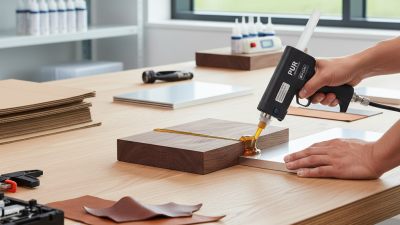
PUR Hot Melt Adhesives are known for their exceptional strength and versatility. They provide strong bonds with materials like wood, plastics, and metals. This is crucial in industries such as packaging, automotive, and furniture manufacturing. However, the effectiveness of these adhesives largely depends on their correct application and environmental conditions. There is a fine balance in achieving the best results.
Despite their advantages, PUR Hot Melt Adhesives come with challenges. Conditions such as temperature and humidity can affect their performance. It often requires adjustments and careful planning to optimize their use. Balancing efficiency with adaptability is vital for achieving desired outcomes. In this evolving industry, understanding PUR Hot Melt Adhesive will lead to better bonding solutions and increased customer satisfaction.
Introduction to PUR Hot Melt Adhesives
PUR hot melt adhesives are gaining popularity in various industries due to their efficiency and versatility. These adhesives feature a unique polyurethane formulation, allowing them to bond well with a variety of substrates. According to a report by the Adhesive and Sealant Council, the global market for hot melt adhesives is expected to reach $9.3 billion by 2025. This highlights not only the growth but also the increasing reliance on effective bonding solutions.
The strength of PUR hot melt adhesives lies in their ability to form strong, durable bonds under diverse conditions. They offer excellent adhesion to both porous and non-porous materials. Their resistance to heat, moisture, and chemicals makes them suitable for packaging, woodworking, and automotive applications. However, challenges still exist. For instance, the adhesive needs to be applied at specific temperatures for optimal bonding, which can complicate the production process.
Moreover, while PUR hot melts exhibit outstanding performance, their application requires careful handling. Improper use can lead to bond failure. This calls for training and expertise among users. A report from the European Adhesives and Sealants industry indicates that proper usage can improve bond quality significantly, emphasizing the importance of skill in the application process.
Advantages of Using PUR Hot Melt Adhesives in Bonding Solutions
PUR hot melt adhesives have gained popularity in various industries for their unique bonding capabilities. These adhesives offer several advantages, making them a preferred choice. One of the key benefits is their exceptional bond strength. They create secure, long-lasting connections. This is particularly important in applications where durability is crucial.
Another advantage of PUR hot melt adhesives is their versatility. They can bond a wide range of materials, including wood, plastic, and metal. This adaptability allows manufacturers to streamline production processes. Unlike some traditional adhesives, PUR options exhibit enhanced performance in different environmental conditions. They resist heat and moisture effectively. However, users must consider the preparation and application methods carefully to achieve optimal results.
The speed of curing is also noteworthy. PUR hot melts set quickly, which accelerates production timelines. However, this rapid setting time may pose challenges for new users. They must be precise in application to avoid wastage. Despite these challenges, the reliability of PUR adhesives remains a strong selling point. Their performance in real-world scenarios often surpasses expectations, reinforcing their role in efficient bonding solutions.
Factors to Consider When Selecting PUR Hot Melt Adhesive
When choosing PUR hot melt adhesive, consider several key factors for optimal results. The application type is crucial. Different projects have varying requirements for flexibility and durability. For instance, some applications may require a strong bond on porous materials, while others need resistance to heat or moisture.
Viscosity is another important aspect. A thicker adhesive provides better stability during application, yet it may be harder to work with. If precision is essential, choose a lower viscosity option. Testing is essential here. An adhesive that works perfectly in one scenario might fail in another due to temperature changes or surface contaminants.
Color and appearance matter too, especially for visible products. Choose a transparent adhesive for aesthetic purposes. Additionally, always consider the curing time. Some adhesives set quickly, which can be effective for high-volume production. However, this can lead to hurried applications that compromise bonding quality. Finding the right balance requires careful experimentation and analysis.
Best PUR Hot Melt Adhesive for Efficient Bonding Solutions
This chart compares different factors influencing the selection of PUR hot melt adhesives, including bond strength, setting time, and temperature resistance. Each factor is rated on a scale of 1 to 10, where higher values indicate better performance.
Top Brands and Their Best PUR Hot Melt Adhesive Products
When exploring the best PUR hot melt adhesives, several brands stand out in the market. PUR adhesives are recognized for their superior bonding strengths, especially on porous substrates. Recent industry reports indicate that the global hot melt adhesive market is projected to reach over $10 billion by 2027, reflecting a steady demand for high-performance bonding solutions.
Among the leading brands, you’ll find those that excel in specific applications. For packaging, certain products exhibit excellent clarity and adhesion strength, enhancing consumer experience. In automotive applications, some adhesives offer durability and resistance to moisture, crucial for long-lasting bonds. However, choosing the right product requires careful consideration of the material being bonded and the service conditions.
When selecting a PUR adhesive, keep these tips in mind:
- Always test a small area first. This helps to evaluate compatibility.
- Remember that bond strength can differ based on substrate preparation.
- Surface cleanliness is vital for optimal adhesion.
- Lastly, stay informed about advancements in adhesive technologies, as the industry is continually evolving.
Emerging formulations offer improved performance and environmental benefits, reflecting industry shifts towards
sustainability.
Applications and Industries Benefiting from PUR Hot Melt Adhesives
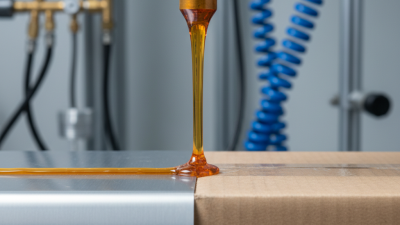
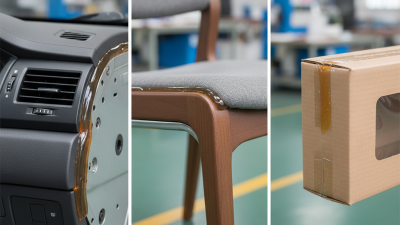
PUR hot melt adhesives are transforming various industries by providing efficient bonding solutions. They are versatile and used in packaging, automotive, and wood assembly. In packaging, these adhesives offer strong bonds that withstand stress and temperature changes. Manufacturers appreciate their quick setting times, allowing for faster production cycles.
The automotive industry also benefits from PUR adhesives. They bond various materials, including plastics and metals, enhancing vehicle durability. Furthermore, these adhesives can resist harsh environmental conditions. This resistance is crucial for automotive applications, where reliability is non-negotiable.
In furniture manufacturing, PUR hot melt adhesives provide secure joints in wooden pieces. The aesthetics of the final product often relies on these adhesives. However, some users struggle with application methods, leading to inconsistencies. Training and careful practice can mitigate these issues. Ultimately, PUR adhesives stand out for their effectiveness. They truly meet diverse industry needs.