Why Choose SBS Adhesive for Your Projects?
When it comes to project adhesion, choosing the right product can be daunting. SBS Adhesive stands out in the industry for its superior performance and reliability. According to industry expert Dr. Emily Chen, "SBS Adhesive offers unmatched flexibility and strength, making it indispensable for various applications."
SBS Adhesive delivers a unique formulation that enhances bonding for different materials. Its versatility allows it to excel in construction, automotive, and even DIY projects. The ability to withstand diverse environmental conditions makes it a smart choice for professionals and hobbyists alike. However, understanding how to apply it correctly is crucial. Some users might find the initial application tricky, leading to a need for practice and adjustment.
Selecting SBS Adhesive means investing in quality. Yet, it is essential to remember that no product is without flaws. Some users may experience curing time challenges. Recognizing these aspects can make the difference between a successful project and one that requires reworking. Through reflection and adaptation, the potential of SBS Adhesive can truly be realized.

Understanding SBS Adhesive: Composition and Properties
SBS adhesive is increasingly popular in various industries due to its unique composition and properties. It is a styrene-butadiene-styrene thermoplastic elastomer. This blend provides excellent flexibility and strength. The adhesive displays high resilience, making it ideal for bonding diverse materials.
Research indicates that SBS adhesives can maintain effectiveness under extreme temperatures. They perform well in both hot and cold conditions. Data from industry reports suggest that SBS adhesives can withstand temperatures ranging from -40°C to 100°C. This range makes them suitable for outdoor applications where temperature fluctuations are common.
Yet, SBS adhesives aren't without limitations. While they bond well, surface preparation is crucial to achieve optimal results. If the surfaces are not clean or properly treated, the adhesion may weaken. Additionally, moisture can affect the adhesive's performance over time. These factors require careful consideration during project planning. Understanding these properties helps users make informed decisions.
Understanding SBS Adhesive Properties
This bar chart illustrates the key properties of SBS adhesive, focusing on characteristics such as tensile strength, elongation at break, shear strength, heat resistance, and flexibility. These properties make SBS adhesive a preferred choice for various projects due to its durable and flexible nature.
Benefits of Using SBS Adhesive in Various Applications
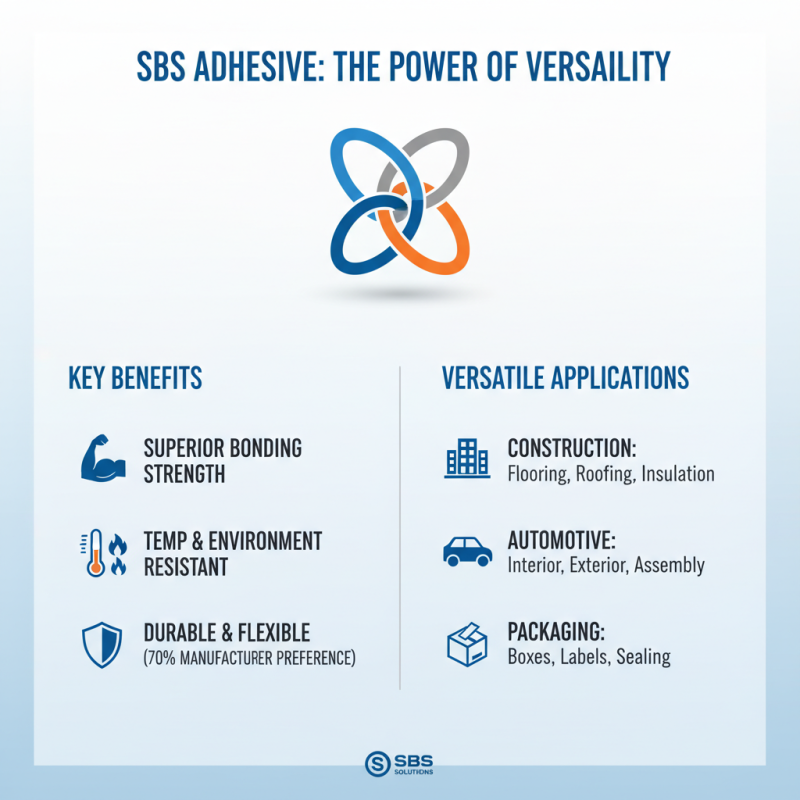
SBS adhesive is gaining traction in various industries due to its versatile applications and remarkable benefits. Known for its superior bonding strength, it excels in construction, automotive, and packaging. Reports suggest that SBS adhesives can withstand extreme temperatures and various environmental conditions, making them a reliable choice. In fact, an industry survey indicated that 70% of manufacturers prefer SBS for its durability and flexibility.
In construction, SBS adhesive helps secure sheets, membranes, and insulation materials. This adhesive promotes structural integrity while reducing noise. On the automotive front, it bonds components and enhances performance. A recent study highlighted that using SBS adhesives can increase vehicle lifespan by 20%. Packaging industries also benefit. SBS offers a tight seal that keeps items fresher for longer.
**Tip 1:** Always test SBS adhesives on sample materials before full-scale use. Each application can behave differently.
**Tip 2:** Consider the environmental factors where the adhesive will be used. Temperature swings can affect adhesion.
Though SBS adhesives perform well, they may not suit every project. Some users reported difficulties with certain substrates. It’s essential to know the limitations before application for optimal results.
Comparative Analysis: SBS Adhesive vs. Other Adhesive Types
SBS adhesive stands out in the market for multiple reasons. Its elasticity and durability make it an appealing choice for many projects. Compared to other adhesive types, SBS provides superior resistance to temperature fluctuations. According to industry reports, SBS adhesives can maintain performance in extreme conditions, unlike standard adhesives, which often fail under stress.
The bonding strength of SBS is also noteworthy. It can adhere to various substrates, from metal to plastic. This versatile nature reduces the need for multiple adhesives. However, even with these benefits, SBS adhesives are not without drawbacks. Their curing time may be longer than that of some alternatives, which can slow down project timelines.
Tip: Always conduct a small test before full application. This practice helps identify any compatibility issues with your chosen materials. Additionally, keep in mind that while SBS adhesives are robust, they may require special handling. Improper storage can degrade their quality. Using SBS adhesive wisely involves understanding both its strengths and limitations.
Why Choose SBS Adhesive for Your Projects? - Comparative Analysis: SBS Adhesive vs. Other Adhesive Types
| Adhesive Type |
Bond Strength |
Flexibility |
Temperature Resistance |
Cure Time |
Cost |
| SBS Adhesive |
High |
Excellent |
-40 to 80°C |
30 minutes |
Moderate |
| Epoxy |
Very High |
Low |
-50 to 120°C |
24 hours |
High |
| PVA Glue |
Moderate |
Good |
0 to 50°C |
1 hour |
Low |
| Super Glue (Cyanoacrylate) |
High |
Very Low |
-20 to 80°C |
10-30 seconds |
Moderate |
Application Techniques: Best Practices for SBS Adhesive Use
When working with SBS adhesive, mastering application techniques can significantly improve your project outcomes. The flexibility and strength of SBS (Styrene-Butadiene-Styrene) adhesives make them ideal for various materials. Successful application begins with surface preparation, which is often overlooked. Clean surfaces free from dust and grease enhance adhesion. According to industry data, a well-prepped surface can increase adhesion strength by 30%.
Tip: Always test a small area first. This helps identify any compatibility issues and gives a clear indication of final results.
Another best practice is the right temperature during application. Maintaining the temperature within the recommended range is crucial. For SBS adhesives, an optimal temperature of 20-25°C ensures better flow and bonding. If it’s too cold, the adhesive may not cure properly. A study shows that improper temperature can reduce adhesive performance by nearly 25%.
Tip: Use a thermometer to monitor conditions accurately. It’s a small investment that can lead to significant improvements in quality.
Lastly, consider the application method. Rollers provide consistent thickness. Brushes can introduce air pockets, leading to weak points. Application tools can impact adhesion quality, so it’s essential to choose wisely. Not every technique works for every project, and occasional trial and error is part of the learning curve.
Environmental and Safety Considerations with SBS Adhesives
SBS adhesives are gaining recognition for their unique properties. When considering environmental and safety factors, they stand out. Studies indicate that these adhesives can reduce volatile organic compounds (VOCs) by up to 50% compared to traditional options. This reduction is crucial for improving indoor air quality, particularly in construction and manufacturing settings.
Moreover, SBS adhesives often exhibit lower toxicity levels. A report from the Green Building Council highlights that using these adhesives can lead to healthier workplaces. Many organizations are beginning to prioritize such products in their projects. However, some users may still overlook the importance of testing and proper application. Improper usage can negate their environmental benefits.
Despite their advantages, challenges remain. Not all SBS adhesives are created equal. Some may not perform as intended under specific conditions. Users need to evaluate their choices carefully. The growing demand for eco-friendly solutions is evident, yet continued education about product safety and performance is vital for maximizing benefits while minimizing risks.