What is Epoxy Resin Adhesive and How to Choose the Best?
Epoxy Resin Adhesive is a powerful bonding solution widely used in various industries. Its unique properties make it popular among professionals and DIY enthusiasts alike. This adhesive offers excellent strength, durability, and resistance to chemicals. When you think of reliable adhesives, epoxy resin should be at the top of your list.
Choosing the right epoxy resin adhesive can be challenging. Not all products on the market are created equal. Some may not provide the strength or flexibility needed for your specific project. It’s essential to consider factors such as the materials being bonded and the environmental conditions they will face. Understanding these details can greatly influence your choice.
In this guide, we will explore how to select the best epoxy resin adhesive for your needs. We will cover critical aspects and tips based on experience and expertise. This information aims to help you make informed decisions while highlighting potential pitfalls you might encounter along the way. Whether you’re a beginner or an expert, this guide is designed to enhance your knowledge of epoxy resin adhesives.
What is Epoxy Resin Adhesive: Definition and Overview
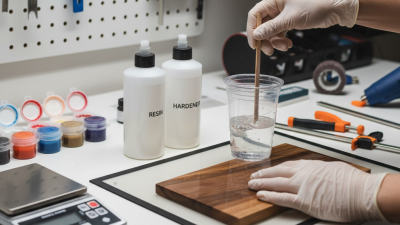
Epoxy resin adhesive is a versatile adhesive widely used in multiple industries. It is known for its strong bonding capabilities and resistance to heat, chemicals, and moisture. Typically composed of two components, resin and hardener, epoxy creates a durable bond as it cures. This adhesive is particularly effective for bonding metal, wood, glass, and certain plastics, making it a go-to choice for both DIY projects and industrial applications.
When choosing the best epoxy resin adhesive, consider the specific materials involved and the environment where the adhesive will be used. Different formulations may cater to specific needs, such as high-temperature resistance or flexibility. Moreover, studies indicate that the global epoxy resin market is expected to reach approximately $12.3 billion by 2027, illustrating its growing importance across various sectors, including automotive, aerospace, and construction.
Tips: Always check the cure time of the epoxy. Some formulations cure faster than others, influencing project timelines. Ensure that surfaces are clean and dry before application for the best results. Epoxy can be challenging to work with; small mistakes in measurement can lead to ineffective bonding, so measure accurately.
Types of Epoxy Resin Adhesives and Their Specific Uses
Epoxy resin adhesives are versatile and strong bonding agents used in various applications. Understanding the different types can help in selecting the right product.
There are several types of epoxy resin adhesives. The first is structural epoxy, which offers exceptional strength and durability. Often used in construction, it can bond metals, plastics, and ceramics. Another type is flexible epoxy, ideal for applications requiring some movement. This adhesive can absorb vibrations, making it useful in automotive and aerospace industries. Lastly, there’s fast-setting epoxy, which cures quickly. It's great for quick repairs, especially in household applications.
Tips for selection: Consider the surfaces you are bonding. Surface preparation is crucial. Clean and roughen surfaces for better adhesion. Check the temperature range of the epoxy. Some work better in extreme conditions. Keep in mind the weight and stress on the bond. Higher weight loads may require structural epoxy.
Using epoxy adhesives requires caution. Mixing ratios must be precise. Incorrect ratios can lead to weak bonds. Always wear gloves and work in a well-ventilated area. Collect data on your specific needs to make an informed choice.
Types of Epoxy Resin Adhesives and Their Uses
Key Properties of Epoxy Resin Adhesives: Strength and Resistance
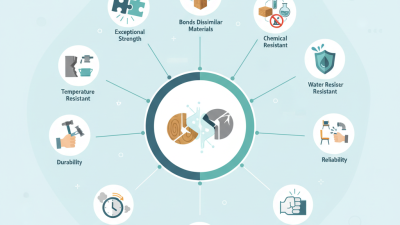
Epoxy resin adhesives are known for their exceptional strength and resistance. These properties make them suitable for various applications. They can bond metals, ceramics, and composites effectively. Strength is a critical factor in choosing the right adhesive. According to industry data, epoxy adhesives can achieve tensile strengths up to 12,000 psi. This remarkable strength makes them ideal for demanding environments.
Resistance to environmental factors is another key benefit of epoxy resin adhesives. They can withstand moisture, chemicals, and temperature fluctuations. Performance testing shows that epoxy can endure conditions ranging from -40°F to 250°F without significant degradation. This makes them reliable for both indoor and outdoor applications. However, overexposure to UV light can weaken these adhesives. Choosing the right formulation is crucial.
When selecting an epoxy adhesive, consider the intended application. Different formulations may offer varying cure times and flexibility. Some might cure too quickly, leaving little time for adjustment. Others may be too flexible for certain structural needs. Understanding these nuances can lead to better decision-making. The right adhesive can enhance the durability and longevity of your projects.
Factors to Consider When Choosing the Best Epoxy Resin Adhesive
When selecting the best epoxy resin adhesive, various factors demand consideration. Strength plays a crucial role. Epoxy adhesives can achieve tensile strengths of 3,000 to 5,000 psi, making them suitable for demanding applications. However, not all projects require this level of strength. Assess the specific needs of your project before making a decision.
Cure time is another vital factor. Some epoxy resins cure quickly, within minutes. Others may take hours. If you need a fast solution, opt for a quicker curing epoxy. Temperature resistance also impacts performance. Many epoxies withstand temperatures up to 200°F, while others excel in extreme heat or cold. Understanding your environment will guide your choice.
Environmental compliance is often overlooked. Some epoxy formulations contain volatile organic compounds (VOCs). This can affect air quality, making low-VOC options a priority for indoor projects. Testing data show that improper ventilation can lead to harmful inhalation risks, revealing the importance of user safety. Be sure to read the safety data sheets for any potential health risks.
What is Epoxy Resin Adhesive and How to Choose the Best? - Factors to Consider When Choosing the Best Epoxy Resin Adhesive
| Factor |
Description |
Considerations |
| Curing Time |
The time it takes for the adhesive to fully cure and achieve maximum strength. |
Faster curing times may be preferred for quick projects, but be aware of pot life. |
| Strength |
The tensile, compressive, and shear strength of the cured adhesive. |
Choose based on the load requirements of the application. |
| Viscosity |
The thickness of the adhesive which affects application method and penetration. |
Thinner epoxies penetrate better, while thicker ones are easier to apply in vertical applications. |
| Temperature Resistance |
The range of temperatures the cured epoxy can withstand without losing properties. |
Consider the environmental conditions of the application area. |
| Chemical Resistance |
The ability of the adhesive to withstand exposure to various chemicals. |
Important for applications in industrial or outdoor settings. |
| Flexibility |
How much bending the cured adhesive can tolerate without cracking. |
Choose more flexible options for applications that experience vibration or movement. |
| Color |
The appearance of the adhesive after curing; can be clear, colored, etc. |
Aesthetic considerations especially for visible joints. |
Application Techniques for Epoxy Resin Adhesives: Tips and Best Practices
Epoxy resin adhesives are widely recognized for their strong bonding capabilities. They can bond a variety of materials, including metal, wood, and plastics. To maximize their effectiveness, it is essential to follow proper application techniques.
Start by thoroughly cleaning the surfaces that will be bonded. Dust, oil, or moisture can affect adhesion. A clean surface promotes a stronger bond. Mix the epoxy resin and hardener according to the manufacturer’s instructions. A report by the American Chemical Society highlights that a proper mix ratio can improve the adhesive's final properties by nearly 30%.
When applying the adhesive, use a consistent technique. Apply even pressure to ensure a uniform layer. Remember that epoxy usually sets quickly; thus, work efficiently. Avoid applying excess adhesive, as it can lead to a weaker bond. Be mindful of temperature and humidity levels during application. Avoid extreme conditions, as they can adversely affect curing.
Tips: Use disposable gloves while mixing. This prevents contamination. A brush or spatula can help spread the adhesive evenly. Additionally, apply clamps to hold the materials in place while curing for the best results. Reflect on your technique. It often requires practice for optimal outcomes.