Why Choose Laminating Adhesive for Your Next Project?
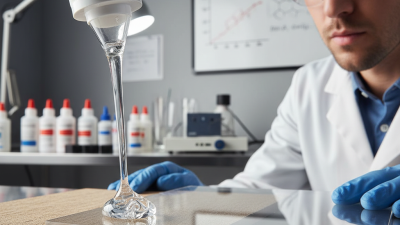
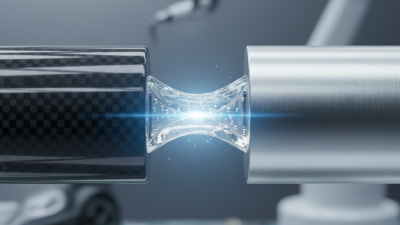
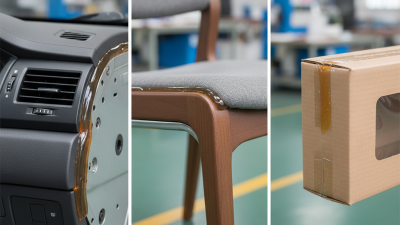
When embarking on a new project, choosing the right materials makes a significant difference. Laminating Adhesive stands out in a crowded marketplace. It provides durability and flexibility, making it ideal for various applications. Whether you're working with paper, plastic, or fabric, this adhesive ensures a strong bond.
Laminating Adhesive offers a sleek finish that elevates the overall appearance of your project. It protects surfaces from wear and tear, an essential feature for items that see regular use. However, one must be mindful of the application process. Improper use can lead to bubbling or uneven layers. Ensuring a smooth application takes practice and patience.
Selecting Laminating Adhesive is not without its challenges. Potential downsides may include drying time and temperature sensitivity. Despite these issues, the benefits often outweigh the drawbacks. With the right knowledge, your project can achieve a professional look and long-lasting performance.
Benefits of Using Laminating Adhesive in Various Projects
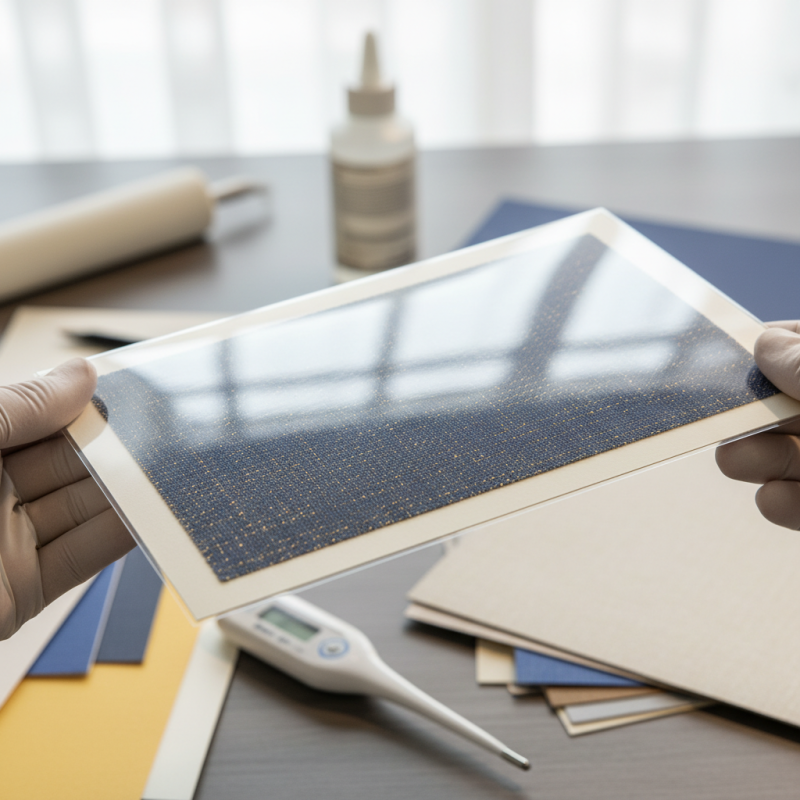
Laminating adhesives offer numerous advantages for various projects. They enhance durability, providing protection against moisture and UV exposure. A recent industry report highlights that products laminated with these adhesives have a lifeline that is 30% longer than those that are not. This is crucial for businesses looking to reduce replacement costs.
In addition to longevity, laminating adhesives improve aesthetics. They can create a glossy finish that enhances colors and graphics. According to a design study, 70% of consumers are more likely to purchase visually appealing products. However, some may overlook the importance of compatible materials, leading to adhesion issues. Research shows that improper application can reduce effectiveness by up to 50%.
The versatility of laminating adhesives is also noteworthy. They can bond diverse substrates, including paper, plastic, and fabric. Yet, not all projects are suited for these adhesives, especially when heavy-duty bonding is required. It's essential to assess the specific needs of your project to avoid costly mistakes.
Why Choose Laminating Adhesive for Your Next Project? - Benefits of Using Laminating Adhesive in Various Projects
| Project Type |
Benefits of Laminating Adhesive |
Application Examples |
| Packaging |
Enhanced durability and moisture resistance |
Food packaging, retail boxes |
| Graphic Display |
Improves visual appeal and protection from wear |
Posters, banners, trade show displays |
| Furniture |
Increases strength and surface finish |
Laminated tabletops, cabinets |
| Stationery |
Adds rigidity and a professional finish |
Business cards, brochures, menus |
| Textiles |
Provides flexibility and enhanced durability |
Garments, upholstery, outdoor fabrics |
Types of Laminating Adhesives and Their Applications
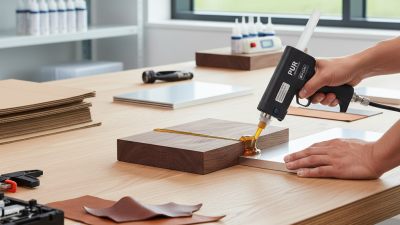
When choosing a laminating adhesive, it’s crucial to understand the various types and their unique applications. There are three primary categories: cold adhesives, hot melts, and solvent-based adhesives. Cold adhesives are most effective for sensitive materials. They offer a gentle bonding option that reduces the risk of damage. Hot melts provide fast bonding and are ideal for high-speed production. These adhesives can cure quickly, making them efficient for high-volume projects. Solvent-based adhesives are known for their strength and durability, making them suitable for outdoor applications.
Many reports indicate that the global adhesive market is expected to grow significantly. In fact, the market is projected to reach USD 70 billion by 2025, with laminating adhesives constituting a substantial part of this growth. This trend highlights the increasing reliance on laminating adhesives across various industries. Industries such as packaging and automotive are particularly driving this demand.
Tips: Always consider the specific material you are working with. Not all adhesives are compatible with all substrates. Conduct tests with small samples before proceeding. This ensures the bond strength meets project requirements. Also, remember the drying time varies significantly among adhesive types. Some may take longer than expected, impacting project timelines.
Types of Laminating Adhesives and Their Applications
How to Choose the Right Laminating Adhesive for Your Needs
Choosing the right laminating adhesive can significantly impact your project's success. Consider the materials you will use. Different adhesives work better with paper, plastic, or fabric. For example, a more flexible adhesive is suitable for fabric, while a stronger bond may be needed for rigid materials. Understand the surface type to avoid adhesive failure.
You should also think about the environment where the laminated items will be used. Will they be exposed to moisture or heat? Weather-resistant adhesives are essential for outdoor items. It’s hard to gauge the durability of some options. Testing can save you future headaches.
Some adhesives may offer a strong bond initially but can fail over time. Be wary of those that seem too good to be true. Researching specific needs may reveal critical details. Explore different manufacturers or seek advice, but allow for trial and error in your selection.
Tips for Properly Applying Laminating Adhesive
When applying laminating adhesive, proper technique is crucial. A 2022 industry report revealed that improper application can reduce bond strength by up to 40%. Start with a clean, dry surface. Dust and moisture can weaken adhesion. Use a lint-free cloth to wipe the area before applying adhesive.
Ensure that the adhesive is evenly spread. Uneven application leads to bubbles and weak spots. Some users may rush this step, but it’s essential to take your time. A roller or brush can help achieve a consistent layer. Be careful with the edges; those are prone to peeling if not secured properly.
Keep the environment in mind. Temperature and humidity can impact curing times. Ideally, work in conditions around 70°F and 50% humidity for optimal results. Experienced professionals often remind newcomers that patience is key. Many have faced issues due to impatience, resulting in poor adhesion. It’s worth reflecting on those experiences to improve future projects.
Common Mistakes to Avoid When Using Laminating Adhesive
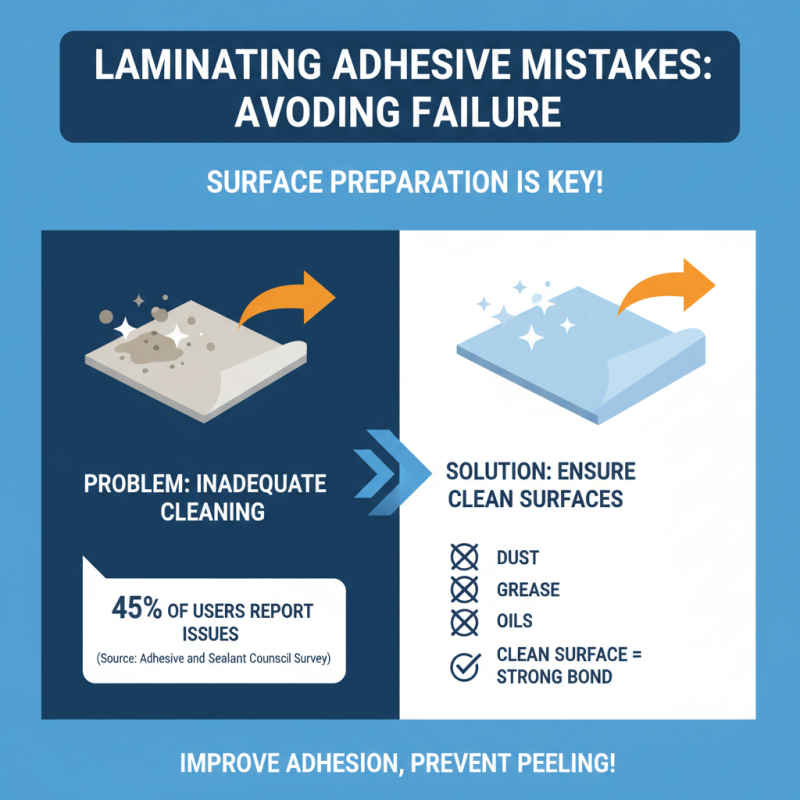
When using laminating adhesive, some common mistakes can lead to disappointing results. One major issue is inadequate surface preparation. In a survey by the Adhesive and Sealant Council, 45% of users reported issues due to not cleaning surfaces properly. Dust and grease can prevent the adhesive from bonding effectively. Ensuring a clean surface improves adhesion significantly.
Timing is also critical. Many users rush the application process. According to a report by the Society of Manufacturing Engineers, 32% of failed projects resulted from improper curing times. Allowing the adhesive to cure fully before handling is essential. Otherwise, failure may occur, leading to costly rework.
Another common mistake is applying too much adhesive. Excess can lead to film bubbles or warping. Data from the National Association of Laminators indicates that controlling adhesive application thickness is vital for achieving a smooth finish. Users should aim for an even layer without overflow. Recognizing these pitfalls can lead to better project outcomes.